
Udo Nwogu | ACF East Region Conference Chair
African Christian Fellowship, USA
The Truth That Sets Us Free
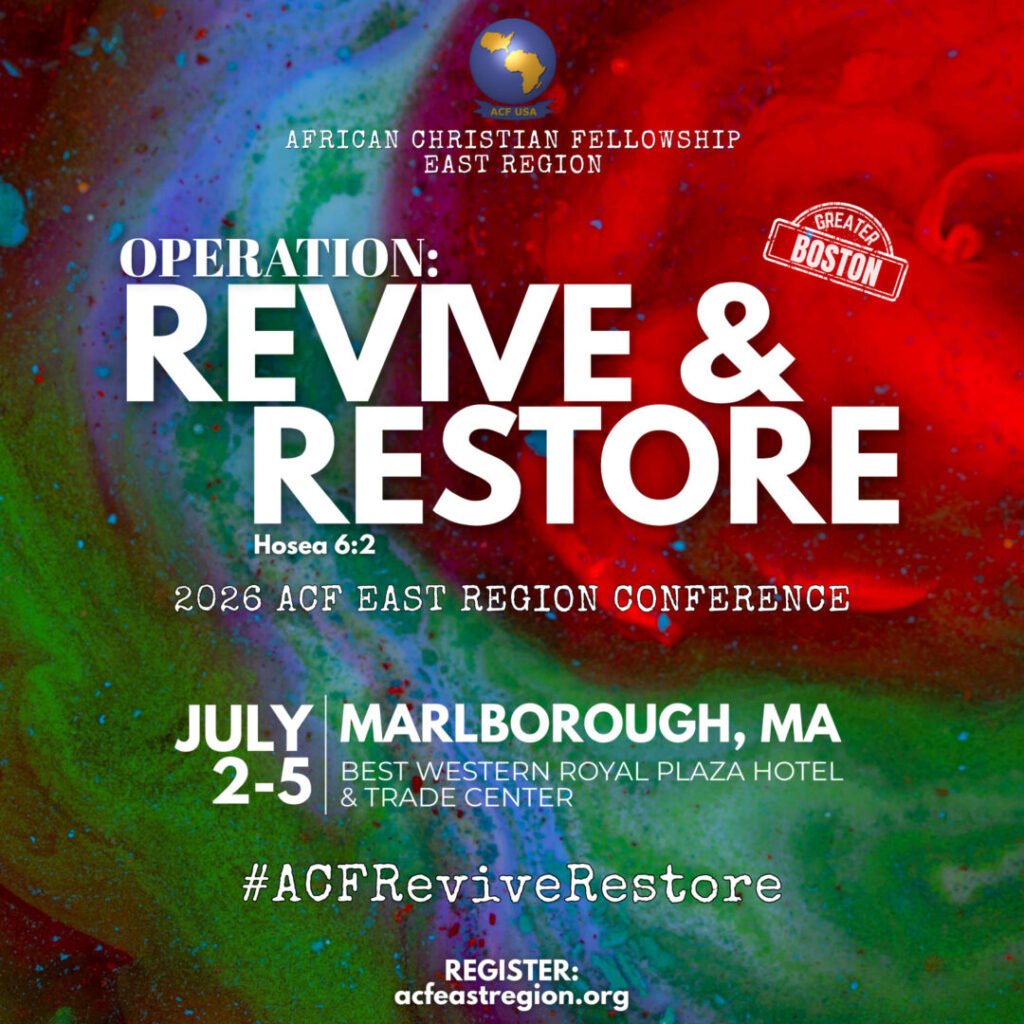
As we prepare for “Operation: Revive & Restore”, it’s crucial that we understand what biblical restoration truly means—especially in the context of our relationships. One of the most misunderstood concepts in Christian community is the relationship between forgiveness and restoration. Too often, we’ve been told that forgiveness automatically means we must restore broken relationships to their former state. But this understanding can lead to repeated harm, boundary violations, and a distorted view of what God calls us to do.
Let’s be clear: Forgiveness does not automatically mean restoration of a relationship.
Forgiveness: A Gift You Give Yourself
Forgiveness is a commandment, not a suggestion. Jesus is unequivocal: “For if you forgive other people when they sin against you, your heavenly Father will also forgive you. But if you do not forgive others their sins, your Father will not forgive your sins” (Matthew 6:14-15).
When we forgive, we are:
- Releasing bitterness from our own hearts
- Refusing to carry the burden of another person’s debt
- Choosing freedom over the prison of resentment
- Trusting God to be the ultimate judge
- Obeying Christ’s command to love and release
Forgiveness is primarily about your heart posture before God. It’s a vertical transaction between you and the Father, declaring that you will not allow unforgiveness to poison your soul or hinder your relationship with Him. You can forgive someone completely—genuinely releasing them from the debt they owe you—without ever allowing them close access to your life again.
Restoration: A Journey That Requires Two
While forgiveness is a unilateral decision you make in your heart, restoration is a bilateral process that requires active participation from both parties. Restoration rebuilds trust, reestablishes relationships, and creates a new foundation for future interaction.
The Bible gives us a clear model. When the prodigal son returned home, his father forgave him immediately and completely (Luke 15:20-24). But notice: the son first “came to his senses,” recognized his wrong, and returned with genuine repentance. Restoration happened because accountability and acknowledgment preceded reunion.
Restoration Cannot Happen Without:
- Genuine Acknowledgment of Harm
The offending party must recognize and own the specific ways they caused injury. Vague apologies like “I’m sorry if you were hurt” or “I’m sorry you feel that way” don’t acknowledge responsibility. True acknowledgment sounds like:
- “I was wrong when I…”
- “What I did hurt you by…”
- “I take full responsibility for…”
- “I understand that my actions caused…”
Without this clear ownership, restoration is building on quicksand.
- Sincere Accountability
Accountability means more than a one-time apology. It involves:
- Accepting consequences for the harm caused
- Being willing to answer questions about what happened
- Allowing verification of changed behavior
- Submitting to wise counsel from trusted third parties
- Being patient with the wounded party’s healing timeline
Proverbs 28:13 reminds us: “Whoever conceals their sins does not prosper, but the one who confesses and renounces them finds mercy.” Confession without renunciation is manipulation, not repentance.
- Clear Steps to Prevent Future Harm
Words alone cannot rebuild trust—actions must follow. The person who caused harm must be willing to:
- Identify the root causes of their harmful behavior
- Seek professional help if needed (counseling, therapy, pastoral support)
- Establish boundaries and accountability structures to prevent recurrence
- Demonstrate consistent change over time
- Respect the boundaries set by the wounded party during the healing process
This is the fruit of genuine repentance that John the Baptist called for: “Produce fruit in keeping with repentance” (Matthew 3:8). Changed behavior is the evidence of changed heart.
When Restoration Isn’t Possible—And That’s Okay
Sometimes, even with all the right components in place, full restoration of a relationship isn’t possible or wise. And that’s not a failure of forgiveness—it’s wisdom.
You might forgive:
- The parent who abused you without giving them unsupervised access to your children
- The friend who betrayed your confidence without returning to the same level of vulnerability
- The leader who misused their authority without placing yourself under their leadership again
Forgiveness says, “I release you from my judgment and trust God with justice.” Restoration says, “I trust you with close access to my life again.” These are two different statements, and both can coexist with integrity.
Healthy Boundaries Honor Both God and People
Some have misused Scripture to pressure wounded people into premature or unwise restoration. They quote “bear with each other and forgive one another” (Colossians 3:13) while ignoring “be wise as serpents” (Matthew 10:16) and “guard your heart” (Proverbs 4:23).
Setting boundaries after forgiveness is not unforgiving—it’s wise. It protects both parties: it protects you from further harm and it protects the other person from the temptation to repeat harmful patterns without consequences.
The Apostle Paul forgave those who abandoned him, but he also made note of those who were trustworthy versus those who were not (2 Timothy 4:9-16). Discernment and forgiveness are not mutually exclusive.
The Goal: True Reviving and Restoring
As we approach “Operation: Revive & Restore”, God is calling us to honest assessment of our relationships. Revival in our personal lives and corporate body requires:
- Releasing the bitterness we’ve held onto
- Forgiving freely as Christ forgave us
- Being honest about where restoration is and isn’t appropriate
- Creating healthy boundaries that honor both grace and wisdom
- Doing the hard work of genuine repentance where we’ve caused harm
- Extending grace without enabling continued dysfunction
True restoration—whether in marriage, family, friendship, or church community—is possible when both parties are willing to walk the difficult but redemptive path of accountability, change, and demonstrated trustworthiness over time.
Your Next Step
As you prepare your heart for the conference, ask yourself:
- Where have I confused forgiveness with mandatory restoration, allowing continued harm?
- What boundaries do I need to establish to protect the work God is doing in me?
- Where have I caused harm that requires my genuine acknowledgment and accountability?
- What steps do I need to take to demonstrate changed behavior in relationships I want to restore?
Forgiveness is immediate and complete. Restoration is gradual and conditional. Both are biblical. Both honor God. Understanding the difference will set you free to experience true revival in your relationships.
“After two days he will revive us; on the third day he will restore us, that we may live in his presence.” — Hosea 6:2
REGISTER FOR OPERATION: REVIVE & RESTORE 2026