Dr. Eliada Griffin-EL | President, ACF Pittsburgh Chapter
African Christian Fellowship, USA
Can the body of Christ experience a “loveless revival”? Can we go through the acts and aesthetics of encountering the Spirit of God, and yet leave with our hearts unchanged, untouched, and untransformed?
Revival Without Love
This question was the looming revelation of our Pittsburgh chapter’s bi-weekly fellowship on February 14, 2026. As we wished each other a loving Valentine’s Day and acknowledged this celebration that the world has heralded as a pinnacle of intimate expression, Professor Wosu led us to the well known Scriptures of 1 Corinthians 13. We reviewed the readily cited declarations of what love is and what love is not. We appreciated the scriptural checklist Paul provided by which to discern whether one embodies this crucial outpouring of the Spirit of God.
But the opening verses of chapter 13 captured me most. They remind us that one can have “the tongues of men and angels” (v.1), meaning speaking with divine and moving fluency, and yet not have love. One can have “the gift of prophecy” (v.2), meaning speaking with the knowledge of God and imparting it to His people, and yet not have love. One can “understand all mysteries and all knowledge” (v.2), unveiling grand revelations that only divinity can reveal, and yet not have love.
During revival we press into the Lord to unlock the powers of the prophetic word, the unraveling of His mysteries, and holy words of exhortation. We declare mountain-moving faith (v.2). And yet, amidst such revival-stirring happenings, could love still be missing among the people of God? Can we declare revival and still fall into the very accessible traps of being “puffed up” (v.4), of “parading ourselves” (v.4), of rudeness (v.5), of selfishness (v.5), and everything that love is not?
My heart was wrenched with this question, and it moved our fellowship to deeply pray for a love-filled revival.
The Warning From Nehemiah
The Book of Nehemiah reminds us that we can fall short of His revival by missing the transformative impact of His love. This transformation shapes not only how we worship our God directly, but also how we regard each other as an act of worship unto Him.
Consider God’s people in Nehemiah chapters 4 and 5. In chapter 4, the children of God were in the midst of experiencing the Lord’s miraculous restoration of Judah and Jerusalem. From the beginning of the book of Nehemiah, we read how the Lord convened His people to walk with ignited faith and authority to reclaim their city from which they had been exiled. He equipped them with divine will, revelation, and strength to restore the wall that would secure their holy city.
In chapter 4, Nehemiah’s prophetic leadership boldly proclaimed God’s hand of building and protection, as he led with discernment and wisdom against the enemy’s threats. By chapter 6 we read how God’s people completed the rebuilding of Jerusalem’s wall in remarkable time. God’s restoration was clearly at work.
Surely, the Scriptures would reveal that the children of God would flourish in their spirit of love and might, having seen the Lord Almighty empower them to do the impossible.
Yet Nehemiah chapter 5 reminds us of a sobering reality. The same people whose faith was revived with unfettered hope and revelation were at the same time reprimanded for exploiting their own brothers and sisters. Nehemiah rebuked the wealthy class for “exacting usury from his brother” (v.7), charging excessive interest on loans to the point that fellow Israelites were made slaves to repay debt, taking advantage of those experiencing financial hardship during a famine.
As God’s act of restoring the wall was happening, many lost sight of His eternal call to love and instead prioritized personal gain. They exploited their own brethren to secure their self-enrichment and elevation while the Lord was fighting their enemies.
We ask ourselves, what happened? How could they formerly walk with such obedience and then quickly turn to such lovelessness? How, Father, do we ensure that we do not miss Your providential transformation, not only of our minds and works, but even more so of our hearts?
An ACF Cry For Love
Towards this end, we sought and poured forth a heartfelt prayer for the love-filled revival.
- We prayed that when God does such a reconstructive work in us, we would see it in each other’s gestures, hear it in each other’s utterances, and feel it in every exchange.
- We prayed that the acts of revival would not only include the grand and miraculous, but would also occur in the quiet, personal moments where there is no public stage – choosing forgiveness over offense, speaking with gentleness even when frustrated, observing the meek even when your title is grand, leading with authority but also leading with compassion.
- We prayed that as He realigns our love to Him, He would also do so toward one another – person by person, relationship by relationship – so that once “two or three are gathered” (Matthew 18:20), the evidence of His spiritual work is shared and strengthened across the body of Christ.
Practical Expressions of a Love-Filled Revival
Does this mean I show you grace when the conference program is running late? It does.
Does it mean I speak to you in kindness, even when frustrated? It does.
Does this mean I acknowledge the strength of your idea before I dismiss you for your youth? It does.
Does this mean I acknowledge my own weakness before pointing fingers at yours? It does.
Does this mean I stop to tell you thank you, because I see you and all that you do? It does.
Love abounds among us, brethren. And may His love consume this season of revival and restoration.
We Do Not Arrive At Revival
In conclusion, beloved brethren, we do not arrive at revival when we show up on July 2 to jubilate in the home of our Massachusetts brethren. We pray that by then the revival will have long started in each of us, breaking chains, dragging mistruths, healing wounds, and erasing doubts by the time we convene.
Hence, as we pray away the haunting reality of the Loveless Church (Revelations 2:1 to 7), let us also pray for the Lord’s shielding from the Loveless Revival. As the scriptures in Revelations remind us, we declare that our beloved Savior will commend us for faithful laboring, for our discerning spirit and pursuit of God’s truth, and for our intolerance of all evil. But may our Savior also peer into the heart of ACF East Region and, with His holy smile of approval, tell us “well done” because we never, ever left our first love.
A Prayer for a Love-filled Revival
Father, we thank You for stirring revival among us. Guard our hearts from pride, selfish ambition, and loveless service. Teach us to love one another in word and in deed. Let our revival be marked not only by power, but by patience, humility, and grace. Transform our hearts so that our love for You overflows into love for one another. In Jesus’ name, Amen.
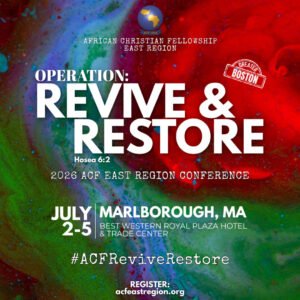
> REGISTER FOR OPERATION: REVIVE & RESTORE 2026 <
About Dr. Eliada Wosu Griffin-EL
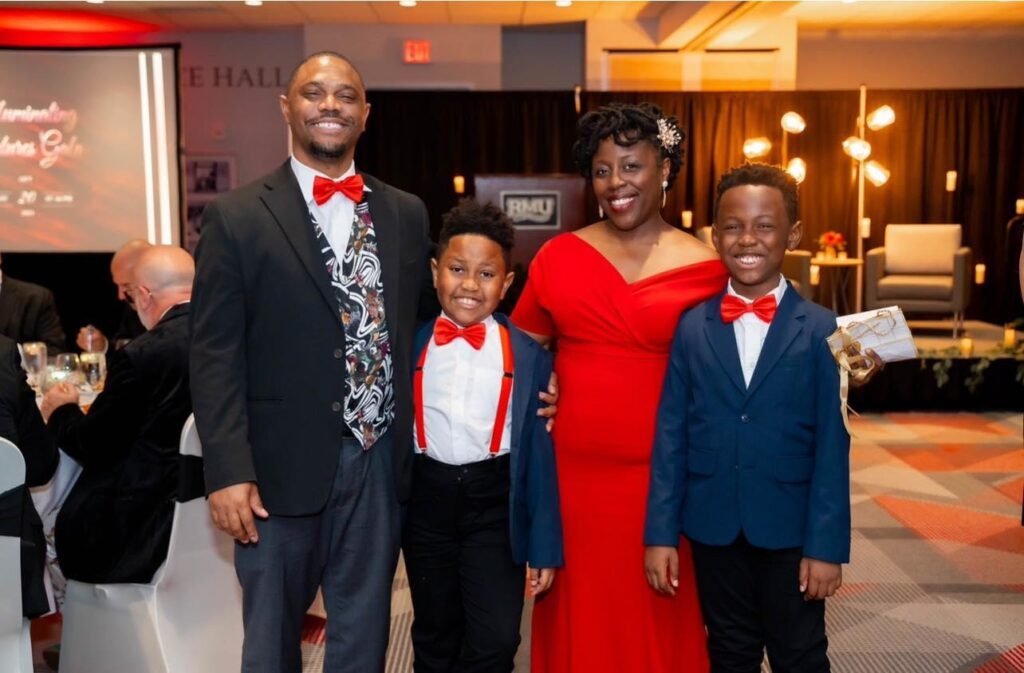
Dr. Eliada Wosu Griffin-EL is a proud daughter of ACF, born and raised in the Norman, OK and New Orleans, LA chapters. She is currently a member of the Pittsburgh Chapter, where she has faithfully served as President for the past six years. She is married to Dr. Nosakhere Griffin-EL, and together they are the grateful parents of Nosakhere Jr. (12) and Onyemachi (11).
With over 15 years as a career academic, Dr. Eliada currently serves as the S. Kent Rockwell Endowed Professor of Entrepreneurship and Director of the Massey Center for Entrepreneurship at Robert Morris University. She and her husband are also co-founders of the award-winning Young Dreamers’ Bookstore, a fully mobile and online children’s bookstore devoted to meeting children at their dreams and reading needs.