Tag: revival

  • Revival and Restoration in Alignment with God’s Purpose

    Revival and Restoration in Alignment with God’s Purpose

    Bro. Festus Ukwuani | President, Washington D.C Chapter

    African Christian Fellowship, USA

    As we prepare for our conference, two of our chapter leaders have written reflections on love and forgiveness—truths that form the foundation of every move of God. Yet love and forgiveness do not stand alone; they lead us somewhere. They draw us back into alignment with God’s divine purpose. Revival is incomplete until it brings us into active participation in what God is doing on the earth. This prompts us to ask: “Revive what? Restore to what?”

    True revival cannot be measured merely by attendance or emotional moments within conference walls. Its success is revealed in how fully it aligns us with God’s ultimate purpose—to reconcile men and women to Himself and to restore His glory on the earth.

     God’s Project of Restoration

    From the beginning, God has desired to restore humanity to Himself. After the fall, He initiated a redemptive plan that unfolded through generations—from Noah to Abraham to Israel—and was ultimately fulfilled in Jesus Christ. Through Christ’s death and resurrection, our reconciliation with God was secured. Jesus then entrusted this mission to ordinary men empowered by the Holy Spirit. When the Spirit came, timid disciples became bold witnesses. The Church was born, and the gospel advanced in power.

    Today, that same mandate rests upon us. Scripture reminds us that all creation eagerly waits for the manifestation of the sons of God (Romans 8:19–23). Revival, therefore, is not merely a moment of spiritual refreshment; it is a divine realignment. It calls us to repentance where we have drifted and restores us to active participation in God’s mission. Any revival that does not draw us back to God’s purpose has missed the mark.

     ACF’s Role in This Season

    The African Christian Fellowship (ACF), USA, is not an accident of history—it is part of God’s unfolding redemptive plan. Scripture reminds us that in every generation, God leaves Himself a witness (Acts 14:16–17), and ACF stands as one of those witnesses. Many of the early members came to the United States for education, unaware that God was positioning them for kingdom impact. The vision and core mandates of ACF reflect divine inspiration, and the love and unity that marked its early years enabled the fellowship to thrive.

    Yet over time, vision can fade if each generation does not continually embrace it. Some may have lost sight of it; others may not fully understand it. This season of revival is God’s gracious invitation to rediscover and realign ourselves with His purpose for ACF.

    Let us therefore ask ourselves:

    • Am I aligning my gifts with that mandate?
    • Why did God bring me to ACF?
    • Do I understand the mandate entrusted to this fellowship?

    When vision is clearly understood and embraced, organizations not only survive—they flourish. Just as Moses reminded a new generation of Israel of God’s commands before entering the Promised Land, so must we revisit and reaffirm our vision in this critical season. We represent multiple generations, experiences, and gifts. Some founding members have gone home to glory; others are aging. The generation called to take up leadership must now arise. This revival season that precedes our conference is evidence that God is not finished with ACF. It is time to arise and shine.

    A Personal Testimony of Alignment

    None of us are here by accident. God orders our steps long before we recognize His design.

    Like many others, I came to the United States in pursuit of academic goals. Through doctoral and postdoctoral training, and later through professional assignments in public health and international development, God exposed me to the realities of life across African nations. Only later did I realize how those experiences had prepared me to serve in the ACF Missions Ministry. In those moments, I could echo the words of Abraham’s servant: “As I was on my way, the Lord led me…” God had been aligning my life’s journey with His purpose all along.

    Brethren, many of us carry experiences, expertise, and exposure that are not merely professional achievements but divine preparations. The question is whether we recognize them—and willingly surrender them for God’s use within ACF. We cannot allow the vision to fade. There are still territories to reach, lives to transform, and communities to impact.

    Revival in a City in Pain

    Our Washington, DC Chapter sits in the heart of a city weighed down by both visible and invisible pain. Each week, we encounter individuals wrestling with addiction, despair, and spiritual emptiness. God has placed this burden upon our hearts. Over the past three years, we have sought to build a healthy fellowship and strengthen our community outreach. Through prayer, retreats, and multi-generational collaboration, God has shown us what unity can accomplish. When we align in purpose, the Church becomes relevant, compassionate, and transformative. Revival is not an abstract idea; it is God healing His Church so that the Church can help heal the community.

    Conclusion: A Call to Unified Alignment

    As we journey toward our regional conference in July, may this season of revival deepen our love, strengthen our forgiveness, and restore us to alignment with God’s purpose. Let us present ourselves as “living stones,” being built into a spiritual house for His glory (1 Peter 2:5). Let us rediscover the vision, embrace unity across generations, and commit our gifts to God’s mission. When love binds us together and forgiveness restores our relationships, alignment with God’s purpose will propel us forward in power.

    May the Lord revive us—not only for inspiration, but for transformation.

    May He restore us—not merely for comfort, but for commission.

    And may this season of revival prepare every chapter of ACF to rise together in unity and fulfill His global mandate.

    > REGISTER FOR OPERATION: REVIVE & RESTORE 2026 <
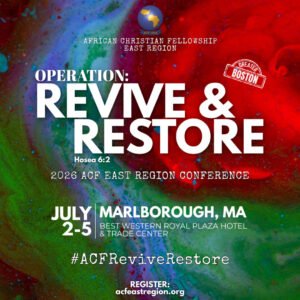
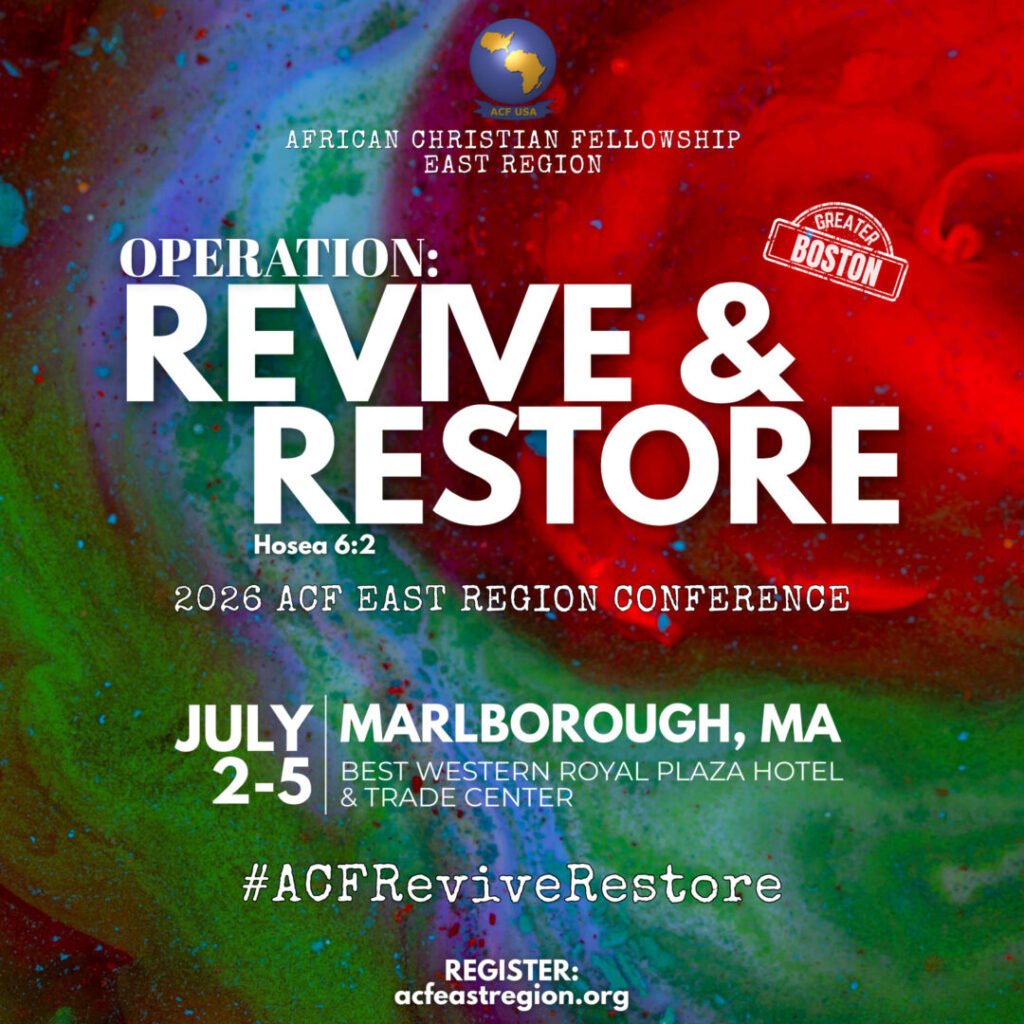
    Promotional graphic for ACF East Region 2026 conference ‘Operation Revive & Restore’ based on Hosea 6:2, featuring ‘July 2-5 Marlborough MA Royal Plaza Trade Center & Hotel Boston Greater’, registration link acfeastregion.org, and hashtag #ACFReviveRestore

    About Dr. Festus Ahamefuna Ukwuani

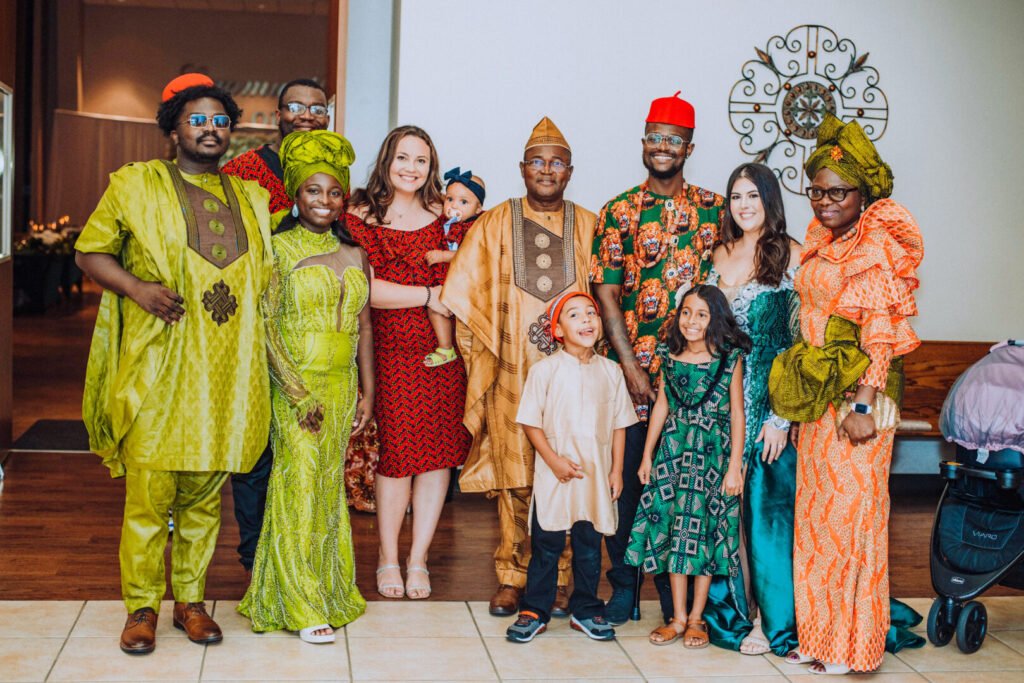
    Dr. Festus Ukwuani, president of ACF Washington D.C. chapter and author of “Revival and Restoration in Alignment with God’s Purpose,” stands with his wife, four children, two daughters-in-law, and three grandchildren dressed in vibrant Nigerian attire at a family gathering.

    Dr. Festus Ahamefuna Ukwuani serves as President of the African Christian Fellowship (ACF), Washington, DC Chapter, and previously as Director of Missions for the ACF East Region. Actively engaged in mission work across Africa since 2007, he brings both spiritual passion and professional expertise to ministry.

    A Statistician-Demographer with the U.S. Census Bureau, Dr. Ukwuani has also served with USAID and the U.S. Department of State under the President’s Emergency Plan for AIDS Relief (PEPFAR). He earned his Ph.D. in Demography from The Pennsylvania State University and completed postdoctoral studies at the University of North Carolina at Chapel Hill.

    Dr. Ukwuani is married to Dr. (Mrs.) Abigail Umehaa Ukwuani. They are blessed with four children and three grandchildren.

  • Forgiveness vs. Restoration: Understanding the Difference

    Forgiveness vs. Restoration: Understanding the Difference

    Udo Nwogu | ACF East Region Conference Chair

    African Christian Fellowship, USA

    The Truth That Sets Us Free     

    As we prepare for “Operation: Revive & Restore”, it’s crucial that we understand what biblical restoration truly means—especially in the context of our relationships. One of the most misunderstood concepts in Christian community is the relationship between forgiveness and restoration. Too often, we’ve been told that forgiveness automatically means we must restore broken relationships to their former state. But this understanding can lead to repeated harm, boundary violations, and a distorted view of what God calls us to do.

    Let’s be clear: Forgiveness does not automatically mean restoration of a relationship.

    Forgiveness: A Gift You Give Yourself

    Forgiveness is a commandment, not a suggestion. Jesus is unequivocal: “For if you forgive other people when they sin against you, your heavenly Father will also forgive you. But if you do not forgive others their sins, your Father will not forgive your sins” (Matthew 6:14-15).

    When we forgive, we are:

    • Releasing bitterness from our own hearts
    • Refusing to carry the burden of another person’s debt
    • Choosing freedom over the prison of resentment
    • Trusting God to be the ultimate judge
    • Obeying Christ’s command to love and release

    Forgiveness is primarily about your heart posture before God. It’s a vertical transaction between you and the Father, declaring that you will not allow unforgiveness to poison your soul or hinder your relationship with Him. You can forgive someone completely—genuinely releasing them from the debt they owe you—without ever allowing them close access to your life again.

    Restoration: A Journey That Requires Two

    While forgiveness is a unilateral decision you make in your heart, restoration is a bilateral process that requires active participation from both parties. Restoration rebuilds trust, reestablishes relationships, and creates a new foundation for future interaction.

    The Bible gives us a clear model. When the prodigal son returned home, his father forgave him immediately and completely (Luke 15:20-24). But notice: the son first “came to his senses,” recognized his wrong, and returned with genuine repentance. Restoration happened because accountability and acknowledgment preceded reunion.

    Restoration Cannot Happen Without:

    1. Genuine Acknowledgment of Harm

    The offending party must recognize and own the specific ways they caused injury. Vague apologies like “I’m sorry if you were hurt” or “I’m sorry you feel that way” don’t acknowledge responsibility. True acknowledgment sounds like:

    • “I was wrong when I…”
    • “What I did hurt you by…”
    • “I take full responsibility for…”
    • “I understand that my actions caused…”

    Without this clear ownership, restoration is building on quicksand.

    1. Sincere Accountability

    Accountability means more than a one-time apology. It involves:

    • Accepting consequences for the harm caused
    • Being willing to answer questions about what happened
    • Allowing verification of changed behavior
    • Submitting to wise counsel from trusted third parties
    • Being patient with the wounded party’s healing timeline

    Proverbs 28:13 reminds us: “Whoever conceals their sins does not prosper, but the one who confesses and renounces them finds mercy.” Confession without renunciation is manipulation, not repentance.

    1. Clear Steps to Prevent Future Harm

    Words alone cannot rebuild trust—actions must follow. The person who caused harm must be willing to:

    • Identify the root causes of their harmful behavior
    • Seek professional help if needed (counseling, therapy, pastoral support)
    • Establish boundaries and accountability structures to prevent recurrence
    • Demonstrate consistent change over time
    • Respect the boundaries set by the wounded party during the healing process

    This is the fruit of genuine repentance that John the Baptist called for: “Produce fruit in keeping with repentance” (Matthew 3:8). Changed behavior is the evidence of changed heart.

    When Restoration Isn’t Possible—And That’s Okay

    Sometimes, even with all the right components in place, full restoration of a relationship isn’t possible or wise. And that’s not a failure of forgiveness—it’s wisdom.

    You might forgive:

    • The parent who abused you without giving them unsupervised access to your children
    • The friend who betrayed your confidence without returning to the same level of vulnerability
    • The leader who misused their authority without placing yourself under their leadership again

    Forgiveness says, “I release you from my judgment and trust God with justice.” Restoration says, “I trust you with close access to my life again.” These are two different statements, and both can coexist with integrity.

    Healthy Boundaries Honor Both God and People

    Some have misused Scripture to pressure wounded people into premature or unwise restoration. They quote “bear with each other and forgive one another” (Colossians 3:13) while ignoring “be wise as serpents” (Matthew 10:16) and “guard your heart” (Proverbs 4:23).

    Setting boundaries after forgiveness is not unforgiving—it’s wise. It protects both parties: it protects you from further harm and it protects the other person from the temptation to repeat harmful patterns without consequences.

    The Apostle Paul forgave those who abandoned him, but he also made note of those who were trustworthy versus those who were not (2 Timothy 4:9-16). Discernment and forgiveness are not mutually exclusive.

    The Goal: True Reviving and Restoring

    As we approach “Operation: Revive & Restore”, God is calling us to honest assessment of our relationships. Revival in our personal lives and corporate body requires:

    • Releasing the bitterness we’ve held onto
    • Forgiving freely as Christ forgave us
    • Being honest about where restoration is and isn’t appropriate
    • Creating healthy boundaries that honor both grace and wisdom
    • Doing the hard work of genuine repentance where we’ve caused harm
    • Extending grace without enabling continued dysfunction

    True restoration—whether in marriage, family, friendship, or church community—is possible when both parties are willing to walk the difficult but redemptive path of accountability, change, and demonstrated trustworthiness over time.

    Your Next Step

    As you prepare your heart for the conference, ask yourself:

    • Where have I confused forgiveness with mandatory restoration, allowing continued harm?
    • What boundaries do I need to establish to protect the work God is doing in me?
    • Where have I caused harm that requires my genuine acknowledgment and accountability?
    • What steps do I need to take to demonstrate changed behavior in relationships I want to restore?

    Forgiveness is immediate and complete. Restoration is gradual and conditional. Both are biblical. Both honor God. Understanding the difference will set you free to experience true revival in your relationships.

    “After two days he will revive us; on the third day he will restore us, that we may live in his presence.” — Hosea 6:2

    REGISTER FOR OPERATION: REVIVE & RESTORE 2026

    Promotional graphic for ACF East Region 2026 conference ‘Operation Revive & Restore’ based on Hosea 6:2, featuring ‘July 2-5 Marlborough MA Royal Plaza Trade Center & Hotel Boston Greater’, registration link acfeastregion.org, and hashtag #ACFReviveRestore


  • Forgiveness: A Prerequisite for Revival

    Forgiveness: A Prerequisite for Revival

    Bro. Shola Alabi | President, ACF Baltimore Chapter

    African Christian Fellowship, USA

    Forgiveness is the prerequisite for revival—without it, God’s healing and restoration cannot flow.

    “Long ago God spoke through the prophets, but now he speaks to us through his Son (Hebrews 1:1–2). Today, He is speaking to ACF East Region, calling us to repentance, revival, and restoration so His will is done in us and through us.”

    Once a vibrant fellowship of men, women, youth, and families from diverse nations, ACF East Region has regressed. Thriving chapters have dwindled to handfuls; some no longer meet. Like Israel, we have drifted from a passionate pursuit of God.

    Yet as Israel fell, they repented and cried out. Ezra modeled this: fasting, confessing national sins, and leading a collective return (Ezra 8:21–36; 9:1–15; 10:1–5). God heard, restored them, and shielded them from scorn—His hand upon them for good.

    Jesus ties forgiveness directly to revival: “If you forgive others their trespasses, your heavenly Father will also forgive you” (Matthew 6:14). Unforgiveness hardens our hearts, clogs the flow of grace, and blocks the Spirit’s fresh outpouring. God is patiently waiting for ACF individuals to repent, release offenses, and seek Him for revival.

    God has granted us an invitation to experience His outpouring at the 2026 ACF East Region Conference in Marlborough, MA. 

    > REGISTER FOR OPERATION: REVIVE & RESTORE 2026 <

    Practical Steps for Biblical Forgiveness and Reconciliation

    “Name, Release, and Repeat” (Daily Practice)

     Forgiveness is rarely a one-time feeling; it is a repeated act of obedience. 

    Throughout your journey to our 2026 conference, come before God and honestly name the person and the specific offense: “Lord, I forgive [name] for [offense], just as You have forgiven me.” 

    When painful memories resurface, choose again to release them to God rather than rehearse the hurt. Over time, this daily “naming and releasing” trains your heart away from bitterness and into mercy. You can strengthen this practice by journaling what you forgave each day and noting how your emotions and reactions begin to shift. This does not deny the pain—it places the pain into God’s hands so He can heal it.

    Bless and Move Toward Peace (Relational Practice)

     Forgiveness is inward; reconciliation, when possible and safe, is outward. 

    Begin by praying intentional blessings over the person: “Lord, bless [name] with Your peace, Your presence, and Your purposes.” 

    This softens your heart and aligns you with God’s love for them. Then, as the Holy Spirit leads and where it is wise, take a small step toward peace—send a kind message, apologize where you have wronged them, or open a gentle conversation. Reconciliation does not always mean restoring the relationship to what it once was, nor does it ignore boundaries. It means you posture yourself to obey God by seeking peace, refusing revenge, and allowing Him to write the next chapter.


    About Shola Alabi and the ACF East Region

    Shola Alabi, husband of Funlayo Alabi and father of two sons, Olufemi and Toluwa, has been an active ACF Baltimore member for over 30 years—where he met and married his wife. Together, they co-founded Shea Radiance, a natural beauty brand crafting high-quality face, body, and hair care products. Shola has served ACF in many capacities over the years and is honored to currently lead as the President ACF Baltimore Chapter.

    The African Christian Fellowship USA, East Region is a community of believers who mobilize through gatherings, grow through discipleship, and impact the USA/Africa through missions.